Alexander N. DeMenil’s Essay
Madame Chouteau Vindicated
The story behind the essay
Alex DeMenil, in 1921, wrote this essay to defend the legitimacy and propriety of Marie Thérèse Bourgeois Chouteau, the "Mother of St. Louis". Following an abusive marriage, she had lived in an unsanctioned, long-term common-law partnership with St. Louis co-founder Pierre Laclède Liguest, with whom she had four children. Because divorce was illegal under French and Roman Catholic law at the time, her actions were viewed by 20th-century descendants like DeMenil as a social embarrassment that needed to be aggressively countered and reframed. The essay was published by Mound City Press in 1921.
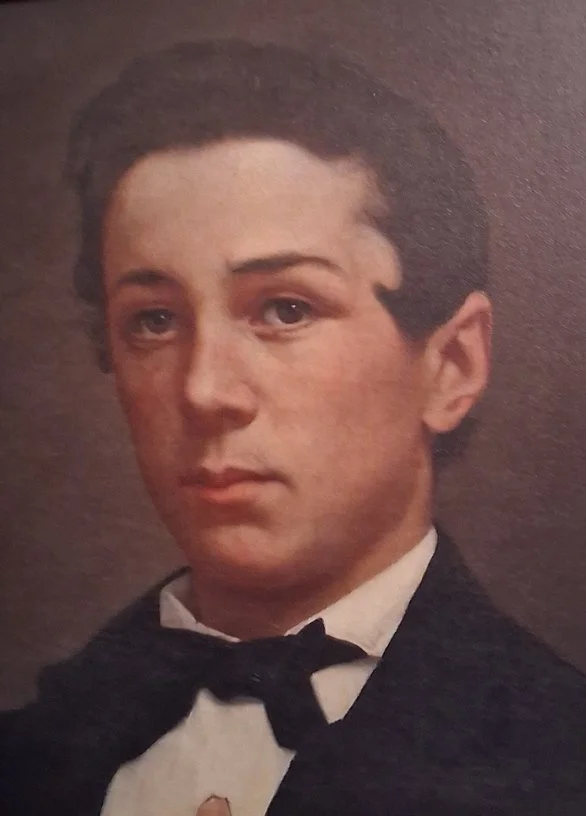
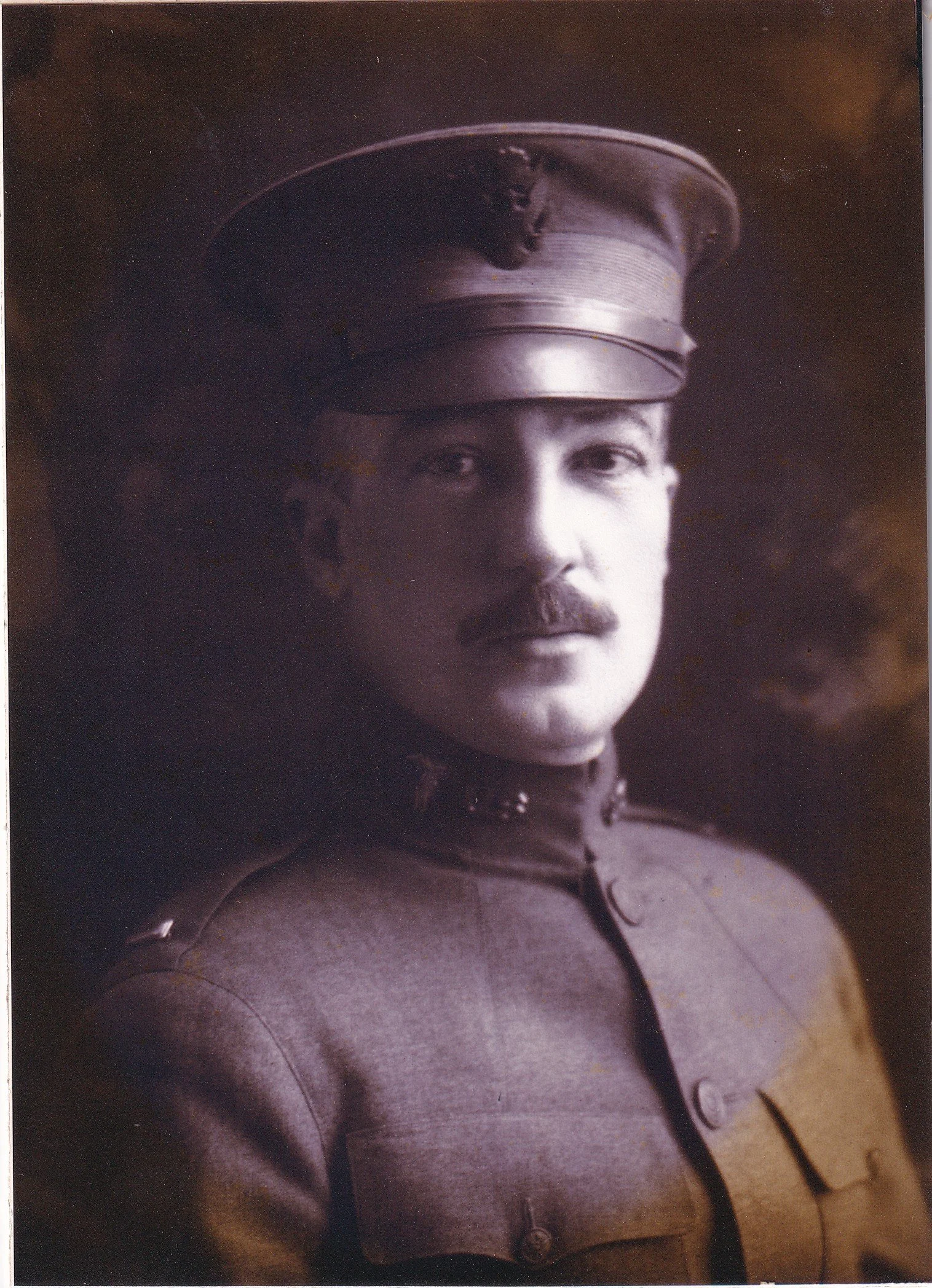
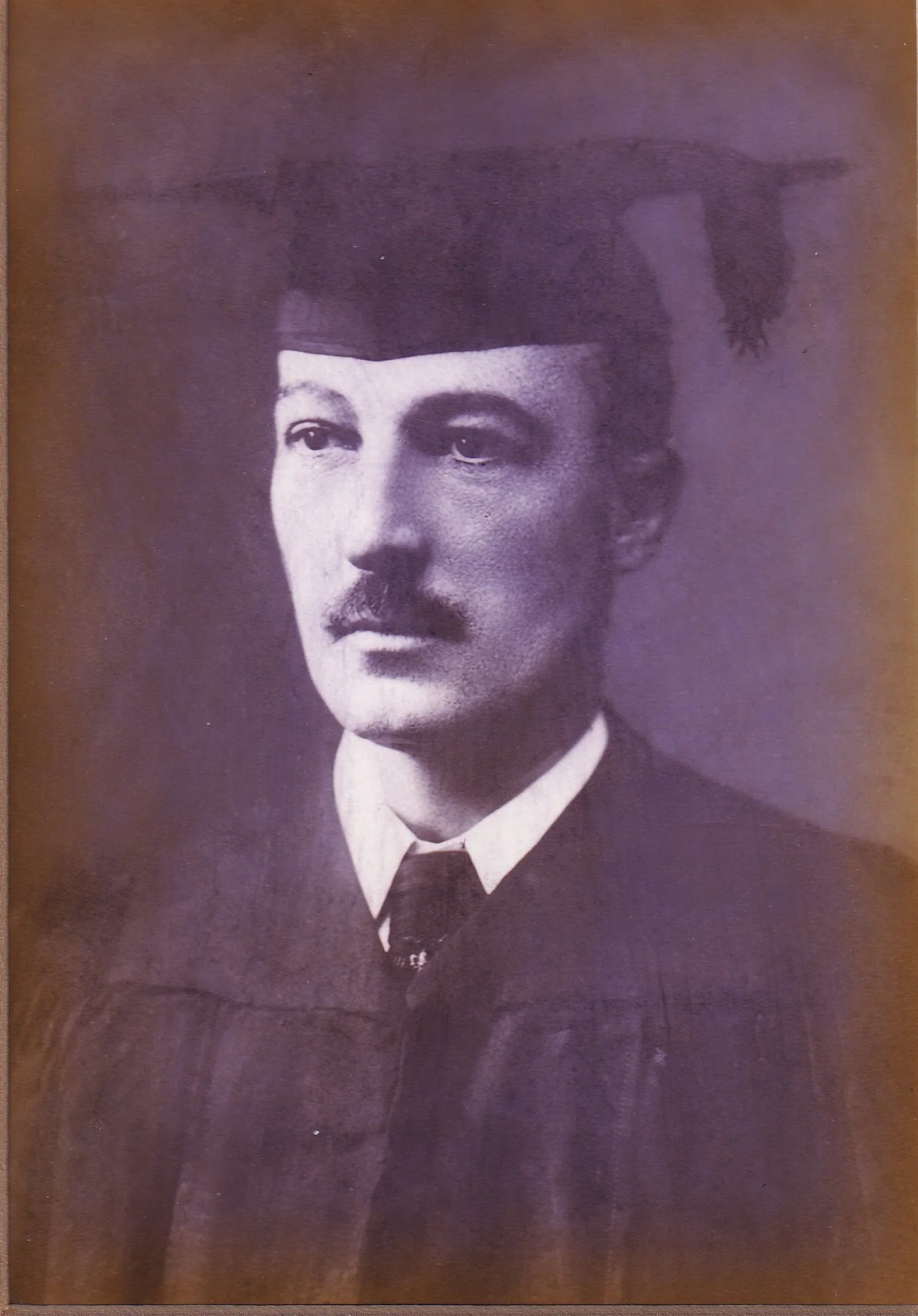
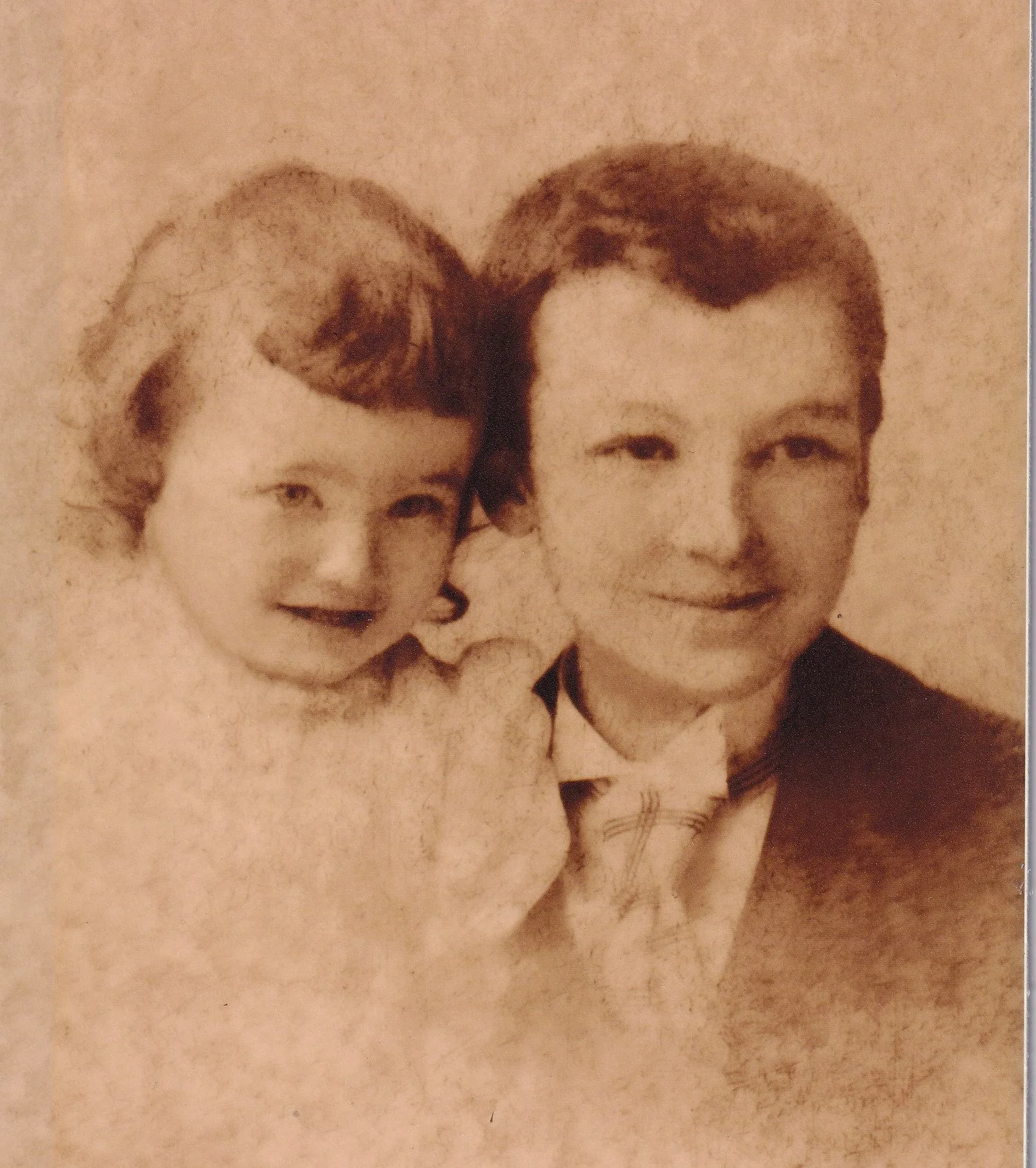
Alexandre Nicholas DeMenil
The essay
To the Editor of the Globe-Democrat: I write to vindicate the most infamously belied women in the history of St. Louis and rescue her memory from the damning stain that has sullied its purity since almost a century. I speak in no uncertain terms to the alleged historians who have written and published purely fictitious and libelous statements against a true, honest, and respectable wife and mother, Marie Therese Bourgeois Chouteau, legitimate wife of Rene August Chouteau and mother of his five legitimate children.
I have always believed and frequently asserted, that it bordered on idiocy to believe that in an intensely Catholic city as New Orleans was in the third quarter of the eighteenth century, Marie Therese Bourgeois, orphan, brought up by the Ursuline nuns, and under the guidance of her uncle and the protection of the bishop, while the wife of Rene Auguste Chouteau lived in open, notorious adultery with Pierre Laclede Liquest, in the face of her husband and entire city, and bore the said Liquest for illegitimate children, which were all baptized in the St. Louis Cathedral, and in each case certified to by the officiating priest and two witnesses as the legitimate children of Rene Auguste Chouteau, born in lawful wedlock with Marie Therese Chouteau - and that she, at the same time, was permitted to attend mass in a Catholic church and perform her other religious duties - as all testimony bears out the tradition that she was a practicing Catholic in New Orleans, as also, later on, in St. Louis.
Separated in 1750
The truth is that she left her husband in 1750, for alleged cruelties on his part, but returned to him in 1757. Mark that there were no children born to her from September 17, 1750, to October 10, 1758. History and popular belief have, since nearly a century, held that:
1. Marie Therese Chouteau left her husband, Rene Auguste Chouteau, in 1751, on which date she had only one legitimate child, Auguste Chouteau, born in 1750.
2. That her second son, Jean Pierre Chouteau, born in New Orleans in 1758, was the child of Pierre Laclede Liquest.
3. That her three daughters, Victorie, Marie Pelagie, and Marie Louise, were born, the first two in New Orleans and the last one in St. Louis, and were the children of Pierre Laclede Liquest.
4. That Madame Chouteau contracted a common law marriage with Pierre Laclede Liquest.
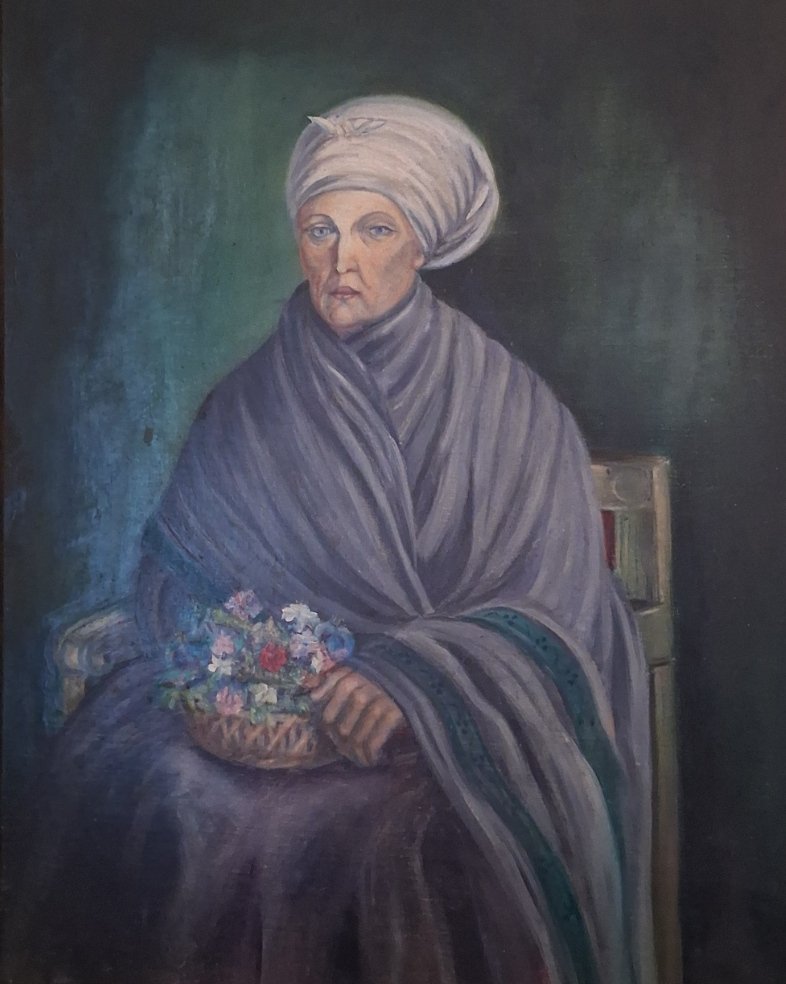
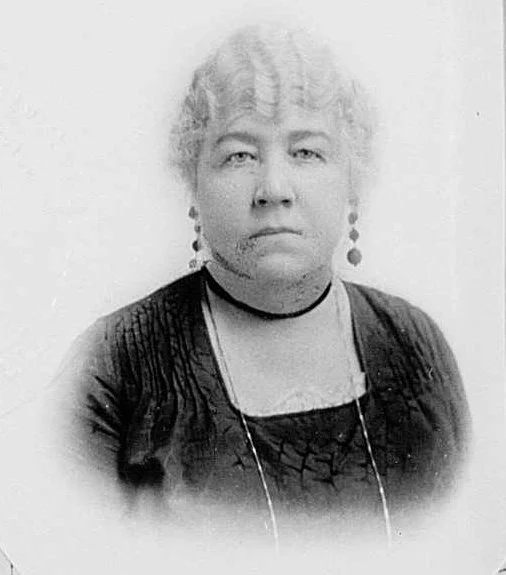
Madame Chouteau
How could Madame Chouteau contract a religious, civil or common law marriage with Pierre Laclede Liquest? There was no divorce law in France and the French colonies until the French Republic of 1870 established one. She therefore could not have been divorced from Rene Auguste Chouteau.
There was no common law marriage law in existence in France and the French colonies during the life of Madame Chouteau. She therefore could not have contracted a common law marriage with Pierre Laclede Liquest.
Furthermore, she could have married Laclede Liquest after the death of her husband in the summer of 1776. Liquest died in 1778, near the mouth of the Arkansas River, while on his way back to St. Louis from New Orleans. I can find no evidence that he was in St. Louis after the death of Rene Auguste Chouteau. At any rate, the archives of Old Cathedral on Walnut Street do not show any such marriage, and they could have been married in no other church.
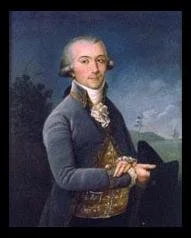
Pierre Laclede Liquest
Liquest owned his home
Did Laclede Liquest reside at Madame Chouteau's house when he was occasionally in St. Louis? Some time between 1880 and 1885 I examined the books at the Recorder's office; they show that Madame Chouteau had a residence house and lot, and that Laclede Liquest owned a house and lots (an entire block) on which it was situated. This property was bought in 1779 by Auguste Chouteau, the year after Liquest's death, and he enlarged and altered it, and it was thereafter known as the Chouteau Mansion.
When I was in New Orleans in 1874, I obtained from the baptismal records in the old St. Louis Cathedral the dates of the births and baptisms of the first four children of Madame Chouteau: Auguste, Jean Pierre, Victoire and Marie Pelagie. The records certify that they were "the legitimate children of Rene Auguste Chouteau and Marie Therese," his wife. These records extend 1750 (Auguste) to 1760, inclusive (Marie Pelagie). Somehow I did not get the date of birth and baptism of the fifth child, Marie Louise Chouteau. Paul Beckwith, in his abominable "Creoles of St. Louis," says that she was born in St. Louis in 1764. This date is universally accepted. On account of it, and my respect for, and good will toward, several of the descendants of Marie Louise Chouteau, this article did not appear in print in 1874.
Last September, somehow, I turned my attention again to the subject. Believing that perhaps less attention might be paid to me, a mere private citizen, than to the authorized representative of an historical society, I asked Mrs. Nettie H. Beauregard, the archivist of the Missouri Historical Society, to write for me and try to obtain the date of the birth of Marie Louise Chouteau, if she was born in New Orleans.
Receives Copy of Record
On October 6, Mrs. Beauregard received a certified copy of the birth and baptism record of Marie Louise Chouteau, signed by G. Lugano, archivist of the St. Louis Cathedral, New Orleans, with the attached official seal. It recites that Marie Louise Chouteau was born on December 4, 1762, in New Orleans, in legitimate marriage of her father and her mother, Rene Auguste Chouteau and Marie Therese, his wife, and was baptized on December 21, 1762. The names of the officiating priest and the godfather and godmother are signed to the document. This is the last of Madame Chouteau's children.
Some time back in the early 80s [1880s], I took a copy of the will of Madame Chouteau at the Recorder's office (St. Louis). It, the will, is dated January 13, 1813, is duly signed, attested and executed before M.P. Leduc, Judge of Probate. In it she recites that she was legally married to Rene Auguste Chouteau, "now deceased," and by the said Rene Auguste Chouteau she had two sons, Auguste and Pierre, and also three daughters, Victoire, Pelagie, and Marie Louise. She was 80 years of age when she executed this will, which she signed "VEUVE (widow) CHOUTEAU." She died the following year.
When Rene Auguste Chouteau died in the summer of 1776, Madame Chouteau and her five children inherited from him. When Pierre Laclede Liquest died on June 20, 1778, they did not inherit from him. (See records of the St. Louis Probate Court.)
The descendants of Pierre, Victoire, Marie Pelagie and Marie Louise Chouteau should not have placidly accepted popular rumors and ungrounded beliefs fostered and recorded by ignorant closet historians, who, instead of investigating, consulting official documents and records, gave forth to the world barefaced falsehoods and smirched the character of an honorable, respectable and unordinarily gifted woman, cast the odium of illegitimate descent on 1,500 or 2,000 respectable, law abiding and , in many cases, prominent descendants, male and female, of Marie Therese Bourgeois Chouteau and Rene Auguste Chouteau, her husband.
In conclusion: Adieu to the illegitimacy of Madame Chouteau's children! Adieu to the myth of her marriage to Pierre Laclede Liquest! St. Louis History must be rewritten.
Alexander N. DeMenil
St. Louis, October 13, 1921
two Objects from our 1904 World's Fair Collection
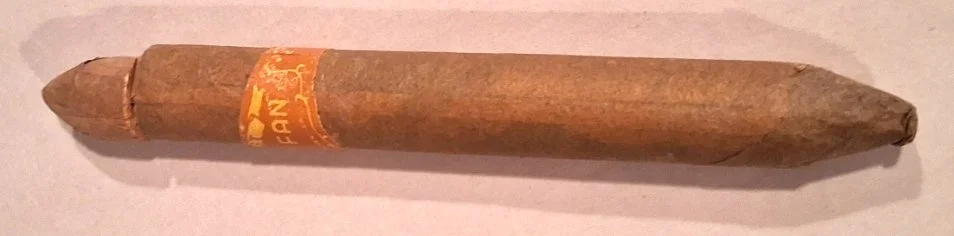
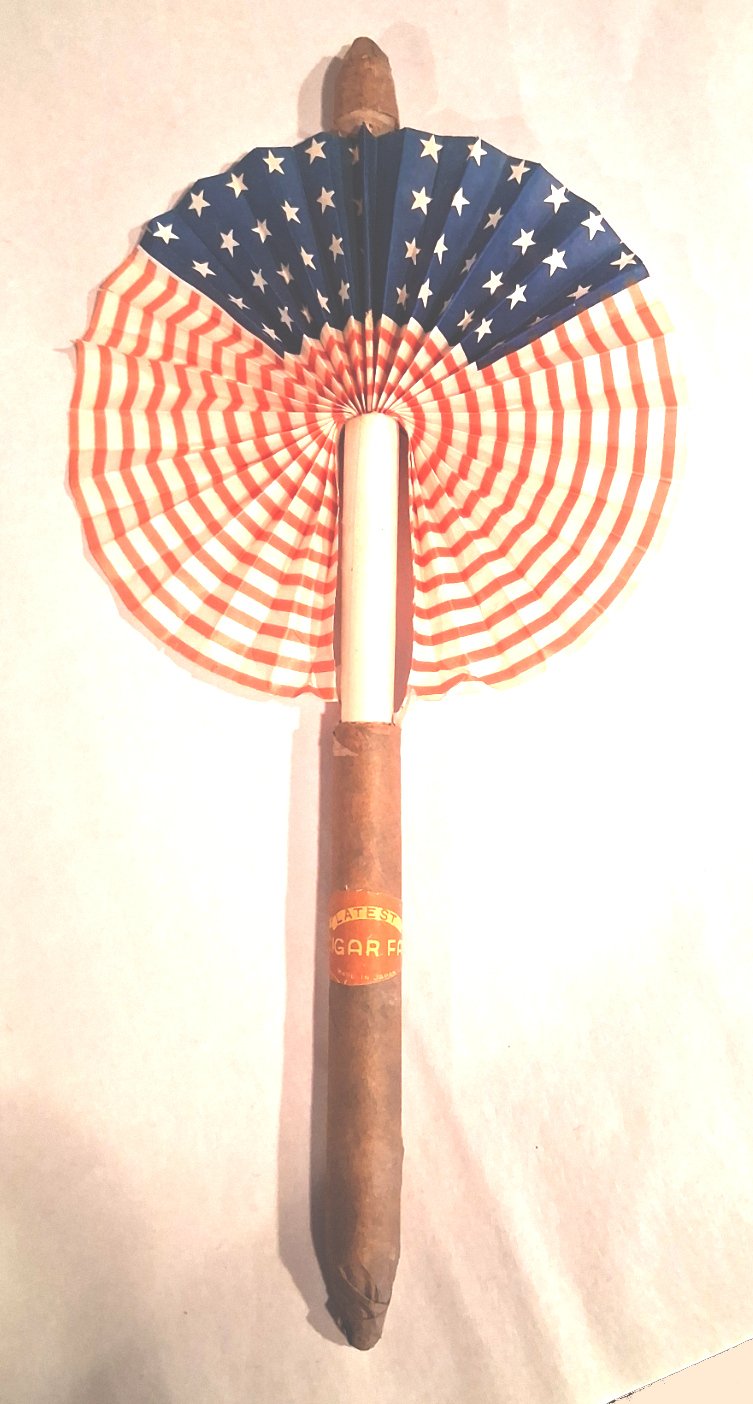
Cigar-shaped souvenir hand fans were a popular novelty item sold during the 1904 St. Louis World’s Fair
• Design: The outer casing or handle of the item was shaped and colored to look like a real rolled cigar, complete with a decorative cigar band marked with the year 1904, reading Latest Cigar Fan.
• Mechanism: When pulled or unrolled, the hidden portion inside the cigar tube opened up into a small paper-cloth hand fan decorated with stars and stribes, to give it a more masculine vibe.
• Collectability: Today, these novelty trick/trompe-l'œil souvenirs are rare collector's items found in historical World’s Fair collections. Our fans, one still in its cigar wrapper and the other open, are here because of the passion of a great collector, Joseph Andrew Meisel, Jr., and the generosity of his daughter, Pat Meisel McBride. See another item from the collection in the following article.
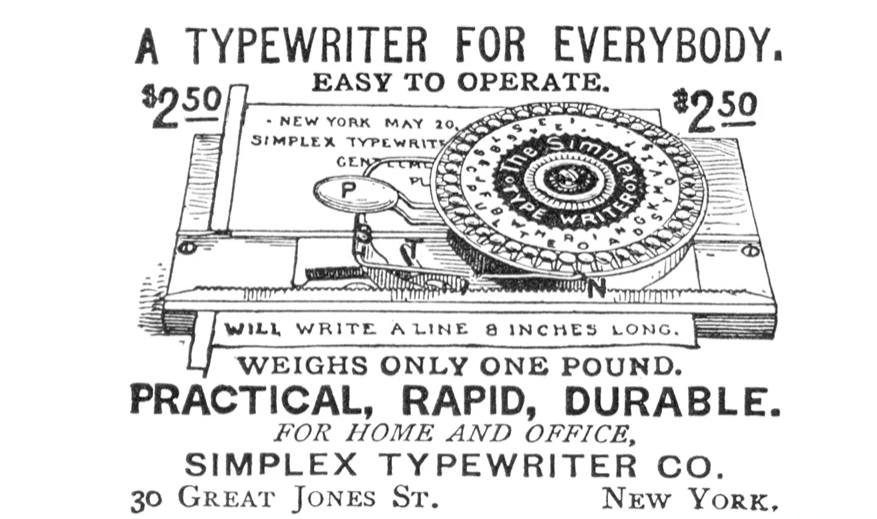
The Simplex Typewriter No. 1, purchased at the 1904 World's Fair in St. Louis
from our Meilsel 1904 World's Fair Collection
The 1904 St. Louis World's Fair represented a notable intersection of affordable 19th-century technology and a massive global showcase of industrial progress.
Invented by Alando M. English and produced by the Simplex Typewriter Company in New York City, the original Simplex was introduced in 1892.
It was an index (or "pinplate") typewriter rather than a standard strike-key machine. Users rotated a circular tin dial to select a character, pushed it down to stamp the rubber type onto the paper using ink pads, and a small arm automatically advanced the carriage.
Unlike heavy, expensive office typewriters like the Remington (which cost around $100), the Simplex No. 1 was built as a practical, low-cost writing machine for everyday people and cost only about $2.50.
The Simplex No. 1 originally wrote in capital letters only, though upper- and lower-case versions followed later. By the 1920s, as secondhand standard typewriters flooded the market, Simplex shifted its focus and successfully marketed later variations as children's toys.
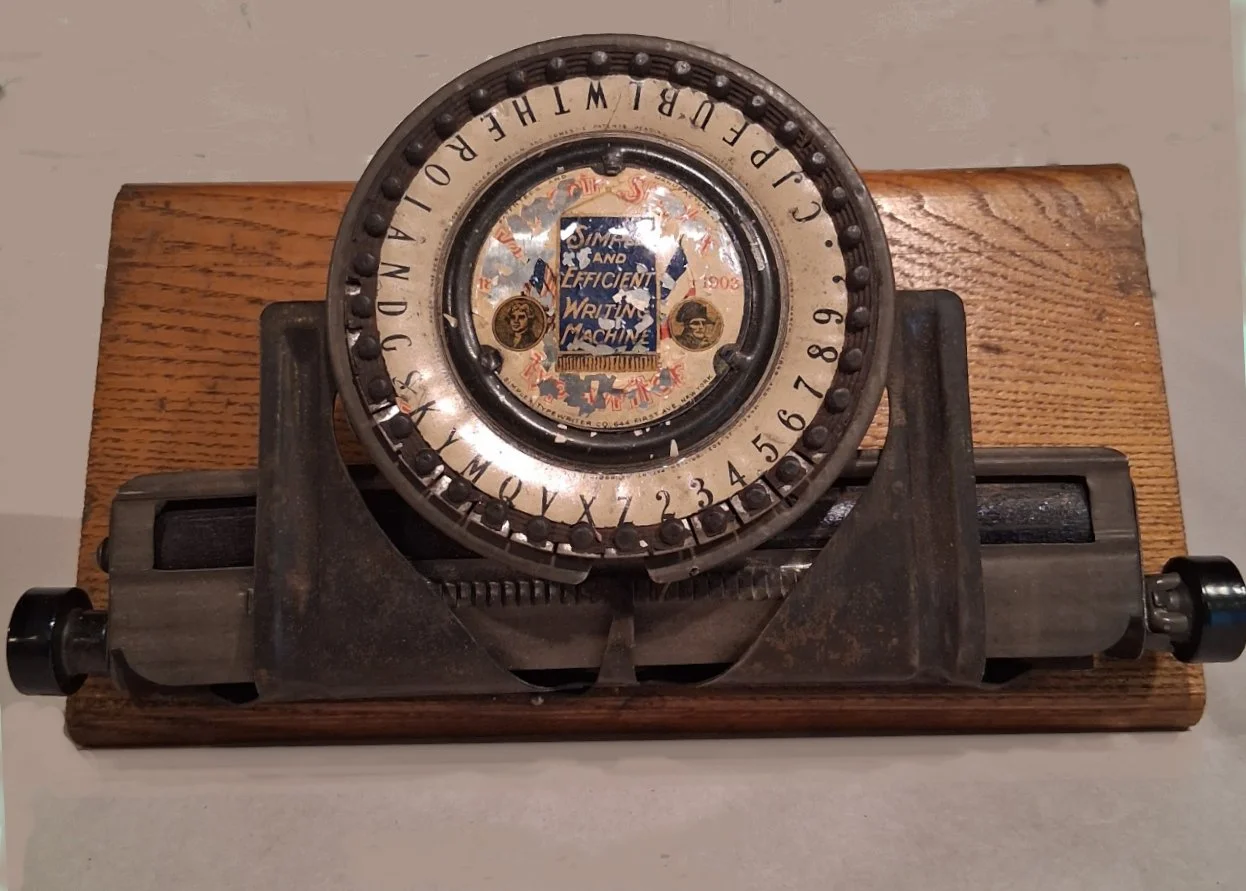
Notice that the index wheel features images of Thomas Jefferson and Napoleon
Typewriter innovation was heavily featured at the World's Fair. Major manufacturers like the Underwood Typewriter Company built elaborate, glowing stained-glass pavilions inside the Palace of Liberal Arts, alongside exhibits from companies like Fox Typewriter, Fay-Sholes, and Smith-Corona, as well as the Blickensderfer Typewriter Company. Specialized souvenir or promotional variations—such as our Simplex Special 1—were also tied to this era to commemorate the World's Fair events.
The mechanical index wheel of the Simplex Typewriter operated as a direct stamping mechanism, separating the step of selecting a character from the step of printing it. It functioned on a principle very similar to a modern hand-held embossing label maker.
The operation can be broken down into three main steps:
Character Selection (Indexing)
The core of the machine is a large, rotatable circular dial or index wheel made of tin.
On the top face of the dial, characters (letters, numbers, and symbols) are clearly printed around the perimeter.
On the underside of the wheel, a matching set of individual characters is cast out of flexible rubber type.
The user manually revolves the index wheel until a pointer or selector knob aligns exactly with the desired character.
Built-In Inking
Instead of a complex moving fabric ribbon found on standard desktop typewriters, early Simplex designs featured integrated felt ink pads positioned directly beneath the rotating disc. As the user spun the index wheel to find a letter, the rubber type elements scraped across these pads, ensuring the stamp was fresh right before hitting the paper.
Stamping & Automatic Spacing
Once aligned, the user pressed down on a nub, key, or the central striking pin along the edge of the selection dial.
Pushing down flexed the individual rubber glyph directly against the paper, stamping the letter onto the page.
Crucially, the downward pressing motion simultaneously engaged a mechanical link connected to a simple escapement rack-and-pawl system.
When the pressure was released, the spring-loaded carriage advanced the paper forward exactly one space to prepare for the next letter.
Because it didn't require intricate key baskets, thousands of individual moving joints, or complex alignment linkages, it was incredibly cheap to manufacture, though far slower than a standard touch-typing keyboard.
Nistenhaus and Chatillon-DeMenil in Event Partnership
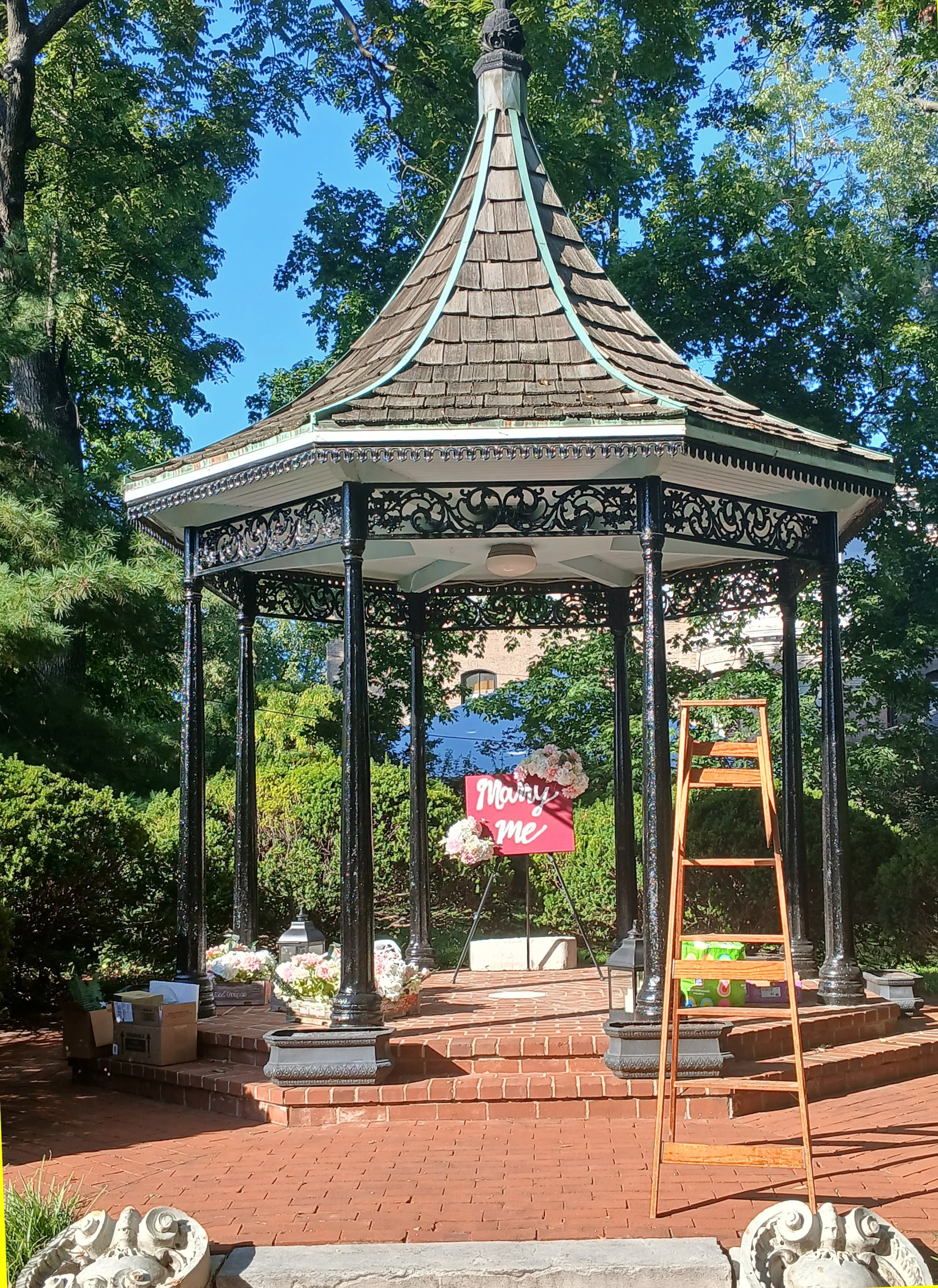
The Chatillon-DeMenil grounds are rentable for private events again! But what you may not know is that this time the rentals are being conducted and managed by a creative team down the street!
Back in 2016, interior/architectural designers Michael Wyrock and Justin Maine established their business, Nistenhaus Design. German for 'nest' & 'house', Nistenhaus focuses on creating spaces that give their clients exceptional design while making clients' spaces the most 'nested' version of themselves.
If you visit their Showroom at 2118 Cherokee St., you'll see their forte of blending new with vintage, and always honoring the building's original architectural style.
The amazing greenhouse and patio space in the back begged the opportunity of bringing in events so that STL could experience intimate gatherings in a unique and stylish way.
Thus, Verde on Cherokee was born and has been thriving and growing as a private events venue that operates alongside Nistenhaus's business.
A huge part of Verde's success, aside of course from its inherent beauty and uniqueness, has been its simple operating and pricing structures, allowing for costs to stay low, which equates to a great price-point that renters love. At the same time they can select from a menu of transparent pricing to select add-ons that take the design of their event to the next level by the team of professional designers.
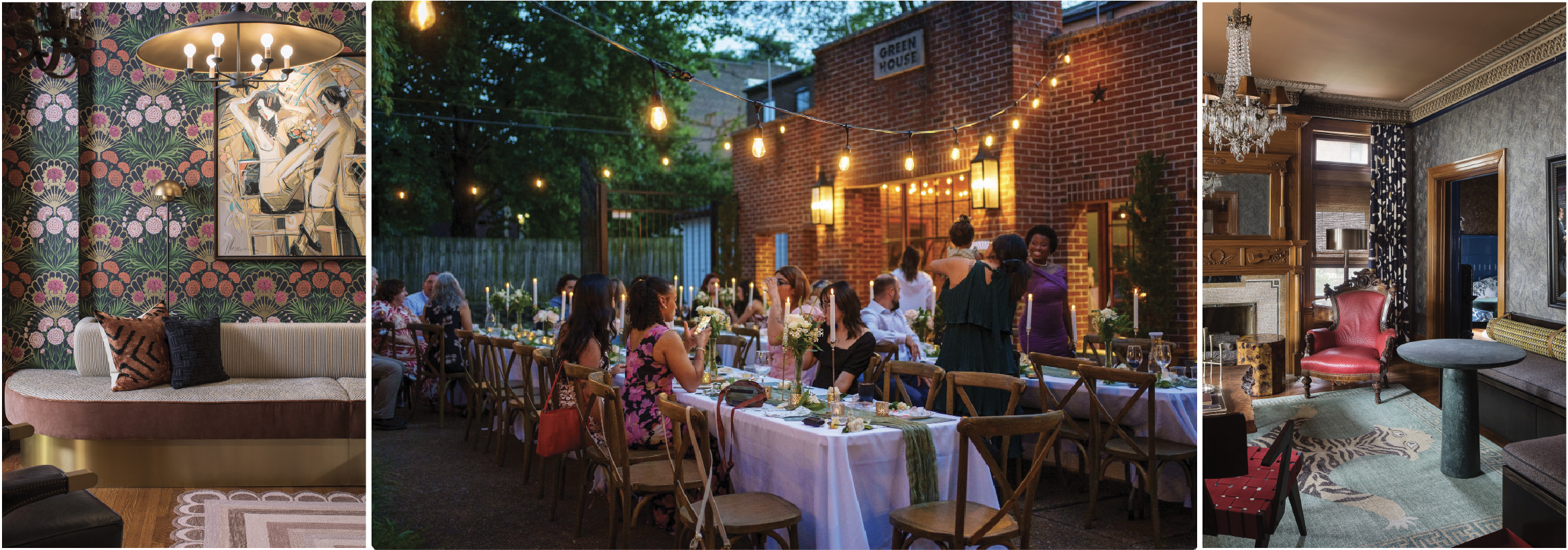
Above, center, the event space at Verde on Cherokee